
Choose restaurant flatware by matching the pieces to your menu, the finish to your table setting, and the design to your washing and restocking routine. Start with what guests use most often. Test samples with your own plates, cups and dishes before ordering in bulk.

Flatware by restaurant type
| Restaurant type | What to look for | What to test |
|---|---|---|
| Fine dining | Balanced pieces suited to each course | Try the knife and fork with a plated main. Check the finish under service lighting. |
| Casual dining | An everyday pattern with matching replacements | Compare satin and mirror finishes after a normal wash and dry cycle. |
| Fast casual | A short list of pieces matched to the menu | Try the fork and spoon with your most popular dishes. |
| Cafés and bakeries | Teaspoons and dessert forks sized for cups and plates | Check that the spoon rests securely on the saucer and the fork cuts through pastry. |
| Buffets and catering | Pieces that stack, sort and pack easily | Load a service tray and run through a table reset with the team. |
Fine dining and tasting menus
List the utensils needed for each course. A small spoon may suit a plated dessert, and a steak knife may be useful for a meat course. The French Laundry’s tasting menu illustrates how the mix can change across courses.
Christofle’s Malmaison collection illustrates how a formal pattern can extend across fish forks, dinner forks and dessert knives. Check which pieces your menu calls for and how each can be cared for and reordered.
Casual dining and fast casual
Start with the pieces your team resets most often. Compare satin and mirror samples after washing and drying, then check each finish under your dining-room lighting. Ask whether matching replacement pieces are available by the piece or by the pack.
In fast casual, use your best-selling dishes to decide which pieces to put out. A grain bowl may need a different spoon from a broth-based dish. Have staff load, sort and reset a batch of samples during a normal shift.
Cafés and bakeries
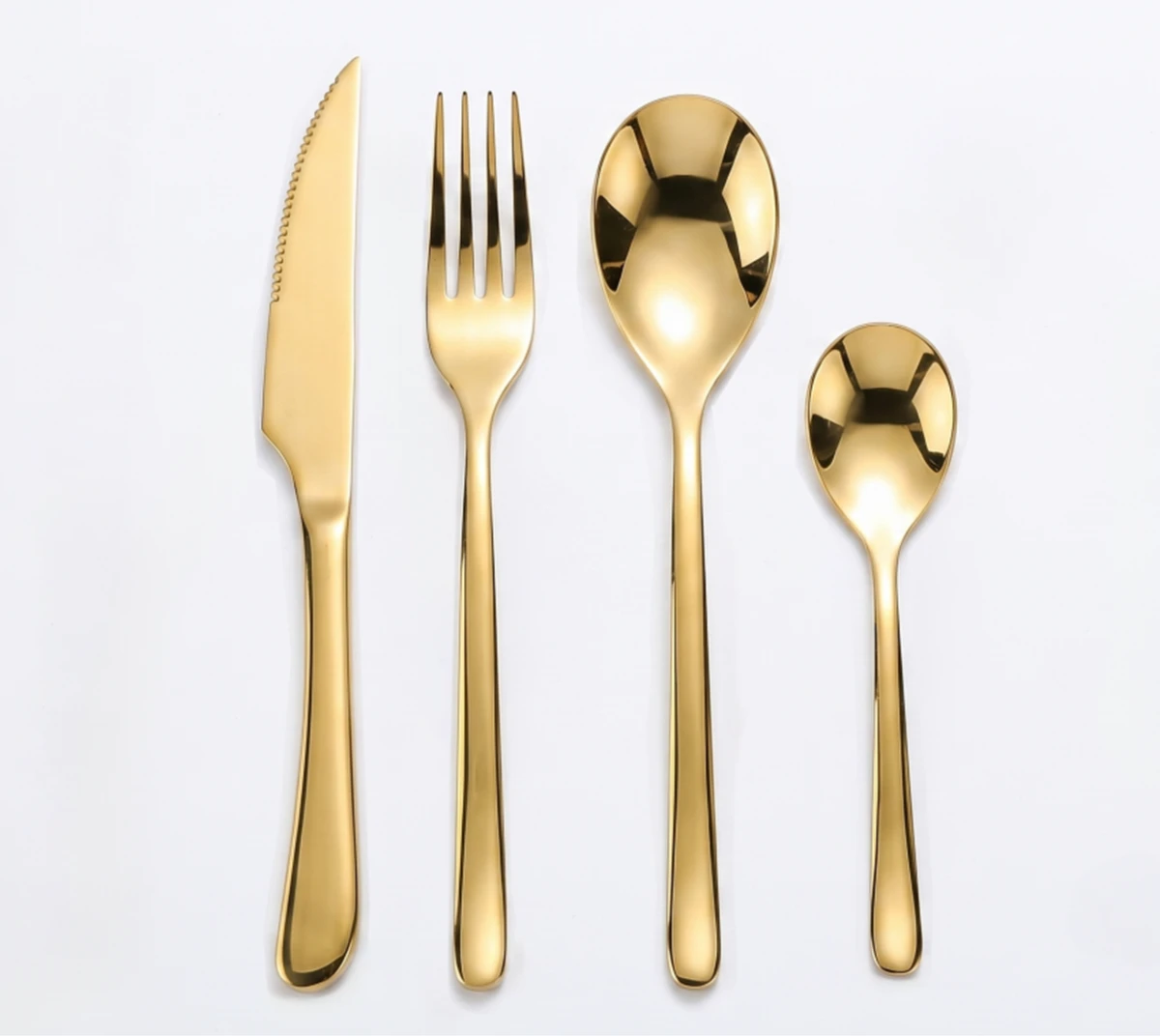
Put a teaspoon next to your smallest cup and test a dessert fork on your most popular pastry. Ask for care instructions for the specific gold-tone or matte black finish you are considering. Check the sample after your normal wash and dry cycle.
Buffets and catering
Check how pieces stack in trays, how quickly staff can sort them, and how much space they take in transport crates. Estimate quantities by piece. Start with peak service, then add enough to cover pieces still in the wash and the spares you want on hand.
What do 18/0, 18/8 and 18/10 mean?
These flatware labels refer to nominal chromium and nickel content. Compare actual samples for balance, finish and comfort. Ask for the material specification and care instructions for the exact pieces you intend to buy. Flatware grades and styles reference.
Check cleanability around handle joints and decorative details. The FDA Food Code, a U.S. model code, addresses material and surface requirements for multiuse utensils in Chapter 4.
Sample checklist before ordering
- Set samples next to your plates, bowls and cups.
- Try each piece with the food or drink it will accompany.
- Wash and dry the samples using your usual process. Check for visible changes.
- Confirm the ordering unit, availability of matching replacements and the expected dispatch date.
Request a restaurant cutlery quote
Tell us what you serve, the pieces and quantities you need, your destination and your preferred arrival date. We can use those details to discuss suitable options and confirm availability.